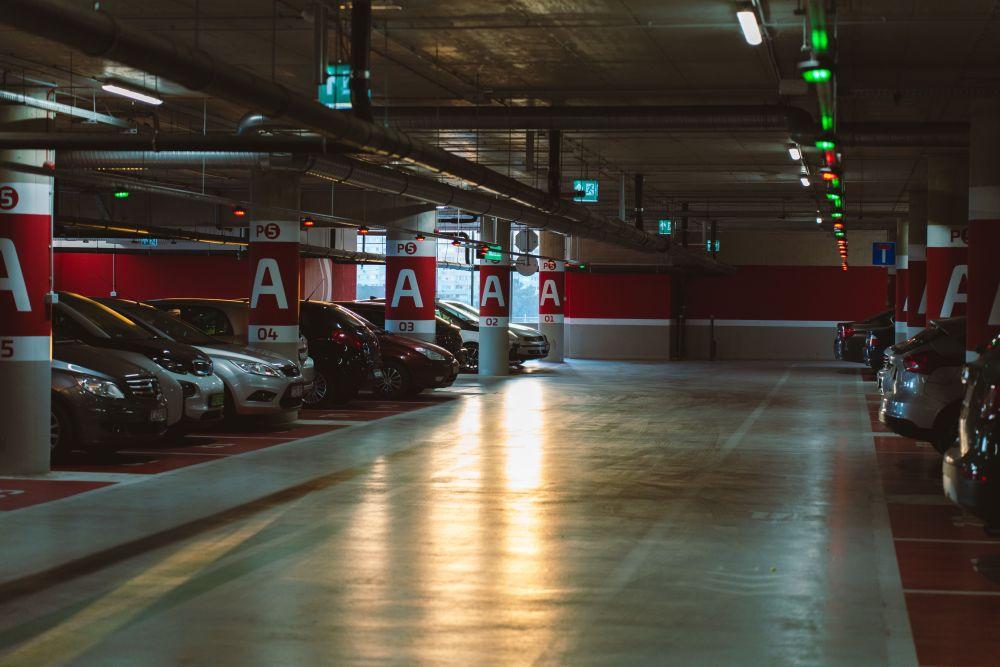
Source: Tibor Szabo/Pexels
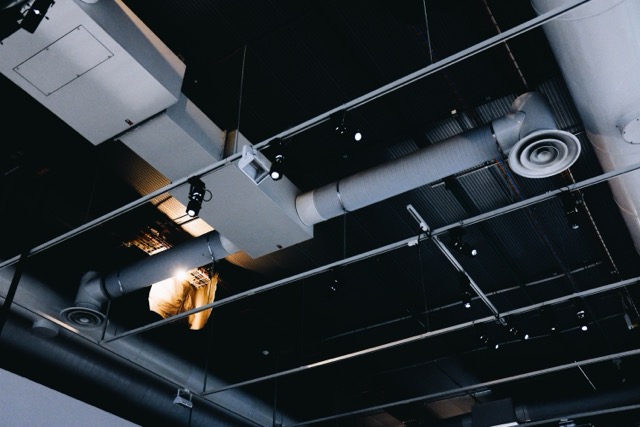
An enclosed car park needs ventilation for two reasons: to remove vehicle exhaust during normal use and to manage smoke if a fire occurs.
Cars produce pollutants such as carbon monoxide when they enter, leave or idle within the space. Without sufficient ventilation, you can’t maintain safe air quality during daily operations.
During a fire, the same space presents a different challenge. Smoke can spread across the ceiling, reduce visibility and obstruct access routes. The ventilation system must therefore be designed not only for everyday air quality, but also for smoke purging and firefighter access.
In Singapore, SS 553:2026 addresses mechanical ventilation during normal building operation, while the SCDF Fire Code 2023 sets out the fire and smoke-control requirements for car parks. The Building and Construction Authority (BCA) also sets specific design requirements and performance benchmarks for car park ventilation. Distinct rules also apply when ductless jet fan systems are proposed in lieu of conventional ductwork.
Why Enclosed Car Parks Need Mechanical Ventilation
An open-sided car park may receive natural ventilation through its perimeter openings. Basement and enclosed car parks have fewer natural paths for air to enter and leave, so mechanical ventilation is needed to ensure proper ventilation through the carpark
A properly designed system:
- Introduces replacement air
- Prevents pollutants from collecting in stagnant zones
- Increases ventilation when pollutant levels or vehicle activity rise
- Prevents moisture buildup, which can cause long-term structural degradation
Some systems usually use carbon monoxide sensors to monitor concentrations and trigger fans only when levels exceed a set threshold. This is called a demand-controlled ventilation system and reduces energy use while maintaining safe air quality.
The Two Functions of a Car Park Ventilation System
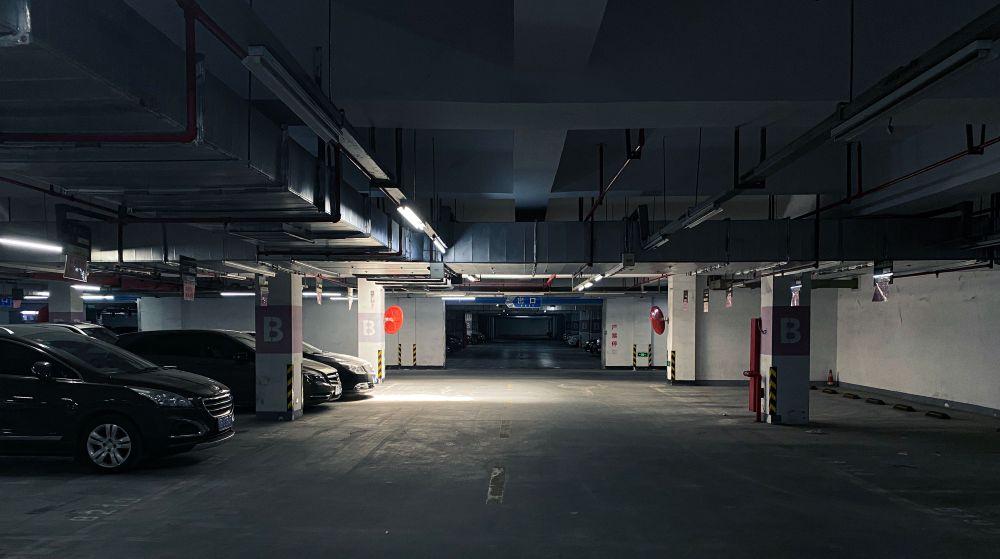
Source: Li Sun/Pexels
A car park ventilation system serves two distinct functions:
1. Pollution Control During Normal Operations
During daily operations, the ventilation system’s primary task involves:
- Fresh-Air Supply: Replacement air is introduced to prevent stale air and pollutants from building up.
- Continuous Exhaust Removal: The ventilation system extracts CO and NO2 generated by vehicles entering, exiting, and idling within the car park throughout the operating day.
- CO Sensor Activation: CO sensors positioned throughout the car park detect COpollutant concentrations and trigger fan activation automatically when levels exceed safe thresholds.
- Demand-Controlled Ventilation: Fans operate only when sensor readings indicate the need, reducing energy consumption while maintaining acceptable air quality at all times.
2. Smoke Control and Purging During a Fire
In a fire emergency, the ventilation system shifts from air quality management to smoke control. SCDF Fire Code 2023 sets specific requirements for how this must work:
- Smoke Control Zone Division: Per SCDF Fire Code 2023 Cl.7.4.4c(1), all car park spaces must be divided into smoke control zones of no more than 2,000m² each, excluding plant rooms and circulation spaces.
- Automatic Sprinkler Activation: The jet fan system activates automatically upon operation of the sprinkler system serving the car park level, with activation confined to the smoke control zone on fire and all adjacent zones.
- Alternative Smoke Detector Activation: As an alternative, two smoke detectors must trigger the system, positioned at the effective mid-range of the jet fan profile, with an in-duct smoke detector at the start point of the exhaust duct.
- Firefighter Override Switch: A manual cut-off and override switch must be provided at the Fire Command Centre (FCC), allowing firefighters to control the system directly.
- Secondary Power Supply: The jet fan system must be supported by a secondary power supply through automatic operation of an emergency generator in case of primary power failure.
Ducted Systems vs Ductless Jet Fan Systems
Car parks can be ventilated through ducted and ductless jet fan systems. The difference between the two matters for both design feasibility and regulatory compliance:
Ducted System | Ductless Jet Fan System | |
How air moves | Sheet metal ductwork carries air from supply points to extract points throughout the car park | High-velocity fans induce airflow directly through open spaces, directing supply air toward each extract point without requiring ductwork |
Ceiling space and installation | Requires significant ceiling space; ductwork often conflicts with electrical and water installations | No ductwork required; ceiling clearance is preserved and coordination with other services is simpler |
Suitability for enclosed car parks | In below-ground and enclosed multi-story car parks, limited ceiling height makes ductwork integration more complex and costly | Better suited to below-ground and enclosed car parks where ceiling height is constrained |
Dead zone coverage | Irregular layouts may result in areas where air movement is insufficient | Jet fans can be repositioned to address dead zones in car parks with irregular layouts |
SCDF applicability | Applicable across all car park types | Under SCDF Fire Code 2023 Cl.7.4.4a, limited to conventional car parks where passenger cars and lightweight vehicles share common driveways; not applicable to mechanized car park systems |
Singapore’s Regulatory Requirements for Car Park Ventilation
Mechanical ventilation systems in car parks in Singapore are governed by SS 553:2026 Code of Practice for Air-Conditioning and Mechanical Ventilation in Buildings. Using jet fans in place of conventional ductwork is treated as an Alternative Solution under this standard. Adopting it requires submission of an Alternative Solution application to the Commissioner of Building Control (CBC) under BCA requirements.
BCA requires that a Professional Engineer in Mechanical Engineering (PE(Mech)) to conduct Computational Fluid Dynamics (CFD) simulations and prepare a report justifying the sufficiency of the jet fan design before submission. This requirement is formalized in BCA, circular of December 2022, which standardized CFD simulation guidelines across the industry.
Additional technical requirements under SCDF Fire Code 2023 govern the jet fan system itself:
- Jet Fan Spacing: Jet fans must be distributed at no more than two-thirds of their tested effective range, measured to the point where air velocity drops to 0.2 m/s, per Cl.7.4.4d(3).
- Minimum Headroom: The minimum headroom for jet fan installation is 3 meters, per Cl.7.4.4d(4).
- Zone Equipment: Each smoke control zone must have its own dedicated system comprising fresh air fans, exhaust air fans, and jet fans, per Cl.7.4.4c(2).
Non-compliance with these requirements can delay or prevent regulatory approval, resulting in project delays and additional rectification costs.
How a Ductless Jet Fan System Is Designed
Compliant ductless car park ventilation system design follows a structured, stage-by-stage process. From initial plan review to final PE-endorsed submission, SCDF and BCA requirements apply at every stage.
1. Plan Review and Site Assessment
The review of architectural and M&E plans establishes the design parameters for the entire project by:
- Identifying ceiling heights against the 3-meter minimum headroom requirement
- Mapping existing building services to avoid installation conflicts
- Determining the smoke control zone layout since each zone requires its own dedicated system of fresh air fans, exhaust fans, and jet fans
This early assessment also allows the design team to identify layout complexities, such as irregular geometry or significant down-stand beams, that would affect jet fan positioning and airflow modeling.
2. CFD Simulation and Design Optimization
Soteria conducts all CFD analysis in-house using advanced software. The simulations model how air, CO, and smoke behave within the car park under both normal daily operations and emergency fire scenarios.
This verifies that the design meets ventilation system performance benchmarks set by SCDF and BCA. Fan placement, thrust levels, and activation sequences are then refined to achieve maximum airflow efficiency, effective smoke purging, and minimized energy costs.
3. Submission Preparation and Regulatory Approval
Once the car park ventilation design is finalized, Soteria’s Professional Engineers (PEs) prepare detailed submission drawings and calculation reports, fully endorsed to meet SCDF and BCA approval requirements. All designs are developed with a full understanding of the building’s overall fire safety plan, ensuring the smoke control strategy aligns with evacuation routes, fire compartmentation, and detection systems.
This integrated approach prevents the smoke control design from being treated in isolation from other safety systems, a common source of submission complications.
With years of hands-on experience with the SCDF Fire Code, SS 553:2026, and BCA submission protocols, Soteria provides end-to-end design and regulatory support. We install ductless jet fan ventilation systems for commercial, industrial, and mixed-use developments in Singapore with full PE endorsement and authority-ready submissions.
Ensure Compliant Car Park Ventilation with Soteria
Car park ventilation systems are crucial in maintaining safe air quality during daily operations and enabling effective smoke control and purging in a fire emergency. In Singapore, a design that does not meet the SCDF Fire Code 2023 and BCA requirements for ductless jet fan systems can result in failed submissions, project delays, and potential enforcement action.
As a computer-aided engineering consultancy firm with decades of PE-led experience, Soteria delivers ductless jet fan designs built for authority approval from the outset. If you are planning a new car park development or reviewing an existing ventilation system for building fire safety compliance, contact Soteria today for expert guidance on SCDF Fire Code and BCA-compliant jet fan design.