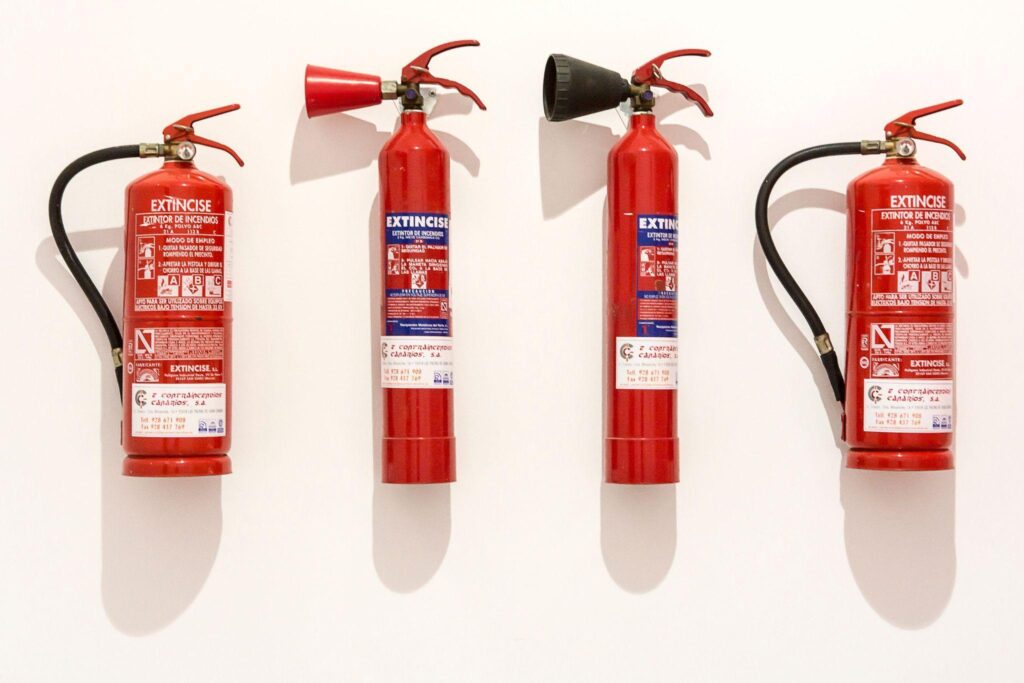
Portable fire extinguishers in Singapore should be visually inspected at least every month and professionally maintained at least once a year. Hydrostatic testing is carried out separately according to the extinguisher type and whenever corrosion or physical damage raises concerns about the cylinder.
These checks are governed by Singapore Standard SS 578, the Code of Practice for the Use and Maintenance of Portable Fire Extinguishers, ensuring that every unit in your facility remains fully charged, easily accessible, and safe to operate in an emergency.
What Are the Fire Extinguisher Inspection Requirements in Singapore?
Singapore Standard SS 578:2019, the Code of Practice for the Use and Maintenance of Portable Fire Extinguishers, covers the inspection, maintenance, and testing requirements for premises owners and occupants.
Portable extinguishers must also conform to the applicable SS EN 3 manufacturing and performance specifications.
Who does the checking, and how often a fire extinguisher should be checked by each party, depends on which tier of work is involved.
- Monthly inspections may be carried out by anyone the owner designates
- Annual maintenance and recharging must be performed by a competent person from an organization approved by a certification body recognized by SCDF
- Hydrostatic testing must be completed when required under SS 578
How Often Should Fire Extinguishers Be Inspected and Serviced?
How often you need to check, service, and test fire extinguishers follows three tiers under SS 578. Each category checks something different, and doing one well does not make up for skipping another.
Frequency | Who Performs It | What It Checks |
Monthly visual check | Owner, occupant or designated staff | Location, accessibility and visible condition |
Annual maintenance | Competent person from an approved organization | Extinguisher condition, contents and operation |
According to SS 578 or when damage is found | Competent person from a certified servicing company | Whether the cylinder can safely withstand pressure |
A monthly check does not replace annual maintenance. Likewise, a recently serviced extinguisher should still be inspected throughout the year.
Monthly Visual Checks
SS 578 defines the monthly check as a quick visual examination to ensure that the extinguisher remains ready for use. Confirm that:
- The extinguisher is in its designated location.
- It is visible and easy to reach.
- The label is legible, and the operating instructions are readable.
- The safety pin and tamper seal are both intact.
- The pressure gauge needle sits in the green zone.
- The extinguisher feels full when weighed or hefted (CO₂ units must be weighed).
- There is no visible damage, corrosion or a clogged nozzle.
- The service label shows the next maintenance date has not passed.
What Happens During Annual Fire Extinguisher Servicing?
Annual servicing is the deeper check behind the monthly routine. A competent person examines the unit and its contents thoroughly at least once a year, or sooner if a monthly check turns up a problem.
This covers internal components, weight and charge verification, plus replacement of any worn parts. If an extinguisher is removed for servicing, the premises must have a replacement of the same type and at least equal rating in place for the duration.
When is Hydrostatic Testing Required?
Hydrostatic testing checks the integrity of the pressurized cylinder. Its scheduled frequency depends on the type and construction of the extinguisher under SS 578.
Do not wait for the next scheduled test when an extinguisher shows:
- Corrosion
- Physical damage
What Should You Do If an Inspection Finds a Problem?
Any deficiency identified during an inspection should be addressed promptly.
Send the extinguisher for professional maintenance when:
- The tamper seal is broken or missing.
- The pressure gauge reads outside the green zone, whether undercharged or overcharged.
- The unit feels lighter than the weight stated on its label.
- There is visible corrosion, denting, or a clogged nozzle.
- The label or service due date is no longer legible.
Service Labels and Control Tags: Documentation Requirements
Once inspection and annual maintenance are done, the extinguisher gets a service label stating:
- The month and year the work was carried out.
- Whether the extinguisher was serviced, recharged, or hydrostatically tested.
- The name of the person and organization who did the work.
Since 1 January 2020, every serviced fire extinguisher must also carry a Control Tag alongside that service label. Each tag has its own serial number, is tamper-proof and carries a QR code.
Control Tags can only be bought from TÜV SÜD PSB, and only by servicing workshops registered with them as approved fire extinguisher service providers. The approved organization also keeps its own records of every tag and label issued, including the date, the serial numbers, and the name of the extinguisher’s owner.
Placement matters too. The service label must not cover the extinguisher’s operating instructions, and the Control Tag needs to sit partially over the service label and partially over the extinguisher body so both stay visible.
What Defects Are Commonly Found During Fire Extinguisher Inspections?
The following defects are regularly identified during inspections and professional servicing:
- Low or zero pressure, with the gauge reading in the red zone.
- Tampered or missing safety pins and seals.
- Corrosion on cylinders, valves, or mounting brackets, especially near the base where moisture collects.
- Blocked or cracked hoses and nozzles.
- Degraded extinguishing agent, particularly powder consolidation in older dry powder units.
- Hidden, obstructed, locked away without emergency access, or mounted outside the height range set under SS 578.
A fire extinguisher does not carry a printed expiry date; condition is tracked through the service and testing schedule instead. To tell if a fire extinguisher is expired, check the service label for the next service due date, confirm the tamper seal and pressure gauge, then look the unit over for damage. A unit that is overdue, tampered with, or physically compromised should be treated as out of service until a competent person clears it.
How Fire Extinguisher Compliance Connects to Your Fire Certificate
For buildings that require a Fire Certificate, the condition of fire protection equipment, including portable extinguishers, forms part of what gets assessed before submission to SCDF. An extinguisher that is overdue for servicing, missing its Control Tag, or sited incorrectly is the kind of gap that surfaces during that very assessment.
Soteria’s Professional Engineer-led SCDF Fire Safety Certificate pre-testing and inspection service reviews fire protection systems ahead of the SCDF assessment. Gaps get corrected before they affect a renewal or a new application, and Soteria’s guide to the SCDF Fire Safety Certificate covers that process in full.
For buildings undergoing redevelopment or Addition and Alteration works, a Fire Code Compliance Audit reviews the building’s fire protection provisions in full. That includes whether extinguisher type, quantity, siting and documentation meet current Fire Code and SS 578 requirements.
Keep Your Fire Extinguishers Compliant
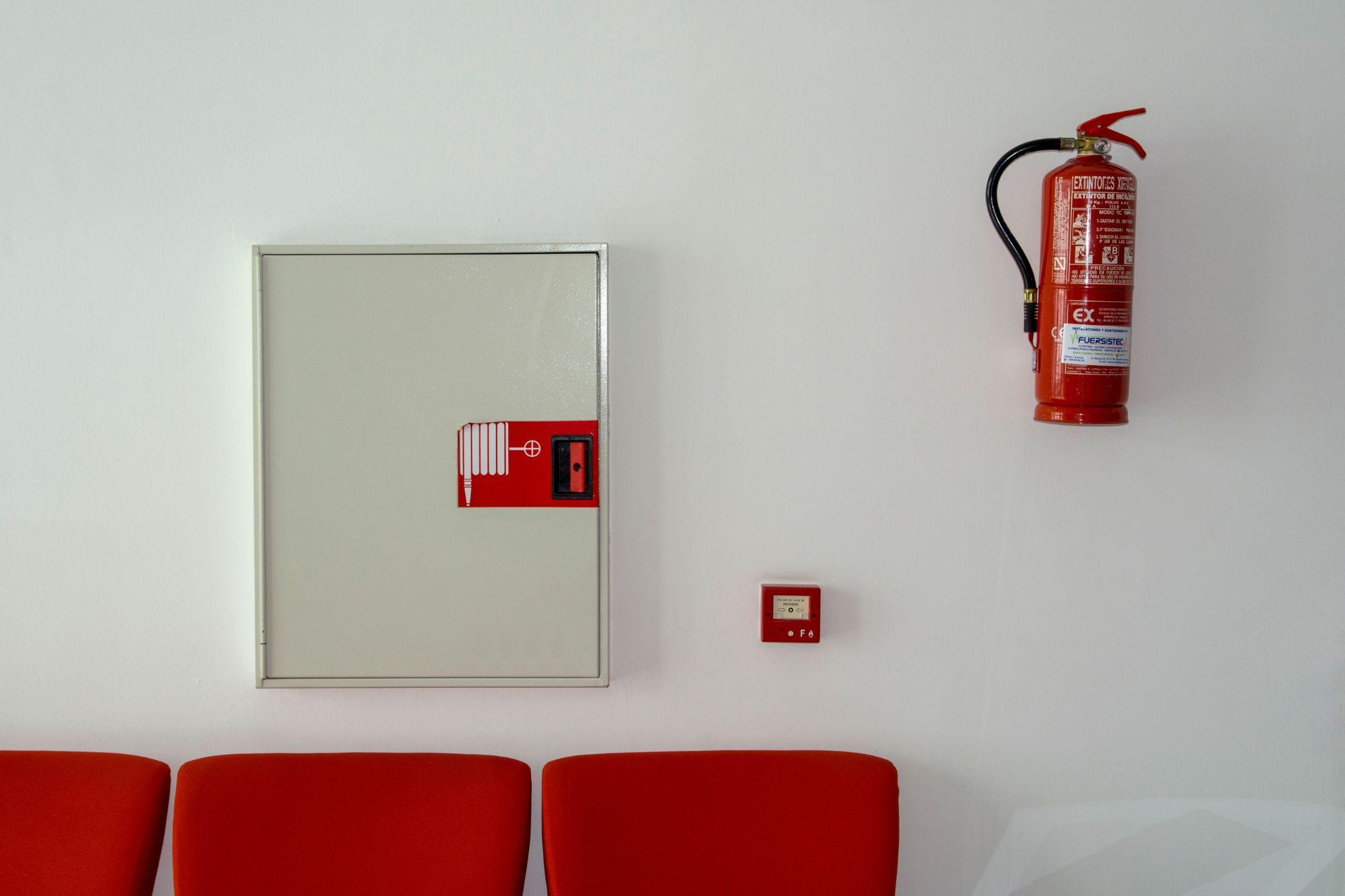
Fire extinguisher inspection runs on three frequency tiers: a monthly visual check, an annual professional service, and hydrostatic testing set by SS 578. Each tier catches something the other two do not.
A unit that looks fine on the outside can still fail if servicing has lapsed or a Control Tag is missing from the record. That gap tends to surface at renewal time.
If a Fire Certificate renewal is coming up, or your fire protection systems need a proper look, get in touch with us or call +65 8786 1995. A PE-led pre-testing inspection or a Fire Code Compliance Audit can be scheduled.