Designing a building with effective fire safety measures helps protect lives and property. Fire safety design involves strategically planning and implementing systems that prevent, contain, and manage fire hazards. Neglecting proper design can result in Singapore Civil Defence Force (SCDF) non-compliance, hefty legal penalties, and serious risks during emergencies.
Thus, it is important to meet regulatory requirements, adopt proven design approaches, integrate key fire protection systems, and conduct thorough compliance checks to ensure your property meets SCDF standards while prioritizing occupant safety.
SCDF Fire Safety Regulations
Singapore’s fire safety framework ensures that every building is designed, built, and maintained to the highest safety standards. This system is governed by the Fire Safety Act (FSA) and administered by the SCDF, which oversees all regulatory and enforcement functions.
- Formulating and Enforcing Regulations: Through the Fire Safety Department (FSD), the SCDF develops and enforces all fire safety and civil defence shelter requirements.
- Plan Approval and Certification: The SCDF is the final authority for approving fire safety plans for new developments and Additions/Alterations (A&A) works. It also issues the Fire Safety Certificate (FSC) in Singapore, required for legal occupation.
- Inspections and Audits: Regular inspections ensure that fire protection systems in your building remain operational and compliant throughout their lifespan.
- Public Education: SCDF actively educates the public and industry stakeholders on fire prevention and emergency preparedness.
- Collaborative Code Development: The Fire Code is reviewed through a multi-agency committee involving engineers, architects, government bodies, and academia, ensuring regulations are rigorous yet practical.
Supporting this hierarchy are Singapore Standards (SS), NFPA codes, and other international standards, including frequent SCDF circulars and amendments keep requirements aligned with new technologies and emerging risks.
Prescriptive vs. Performance-Based Fire Safety Design
Achieving SCDF compliance requires choosing between two foundational approaches, each influencing design flexibility, complexity, and project outcomes.
Prescriptive Pathway
This traditional method relies on strict adherence to the Fire Code’s predefined rules and dimensions.
- Follows exact Fire Code requirements for elements such as stair widths, fire-resistance ratings, and compartmentation.
- Provides clarity, predictability, and a straightforward fire safety approval process, ideal for conventional building designs.
- Ensures compliance without additional justification, as meeting the stated requirements automatically satisfies safety objectives.
- Limited flexibility makes this method less suitable for complex, unconventional, or highly innovative architectural projects.
Performance-Based Pathway
This engineering-driven approach offers the flexibility needed for modern, complex architecture while still meeting SCDF’s safety objectives.
- Uses fire engineering analyses, simulations, and modeling tools, such as CFD and egress modeling, to demonstrate safety equivalence or superiority.
- Enables alternative solutions for unique building features, including atriums, extended travel distances, or the use of Mass Engineered Timber (MET) materials.
- Supports ambitious designs found in high-rise, irregular, or iconic structures where prescriptive rules are impractical.
- Balances design creativity with compliance, making it a strategic pathway for projects that require innovative, tailored fire safety solutions.
Key Components of Fire Safety Design
A well-structured fire safety design combines passive and active protection systems to reduce fire risks, support safe evacuation, and meet SCDF’s regulatory expectations. These systems work together to contain fire, enable early detection, and support both occupant response and firefighting operations.
Passive Fire Protection
These built-in structural features slow the spread of fire and smoke, protect the building’s integrity, and ensure safe evacuation routes.
- Fire-rated walls, floors, and structural elements designed according to required fire resistance ratings.
- Compartmentation strategies that divide the building into contained zones to prevent rapid fire spread.
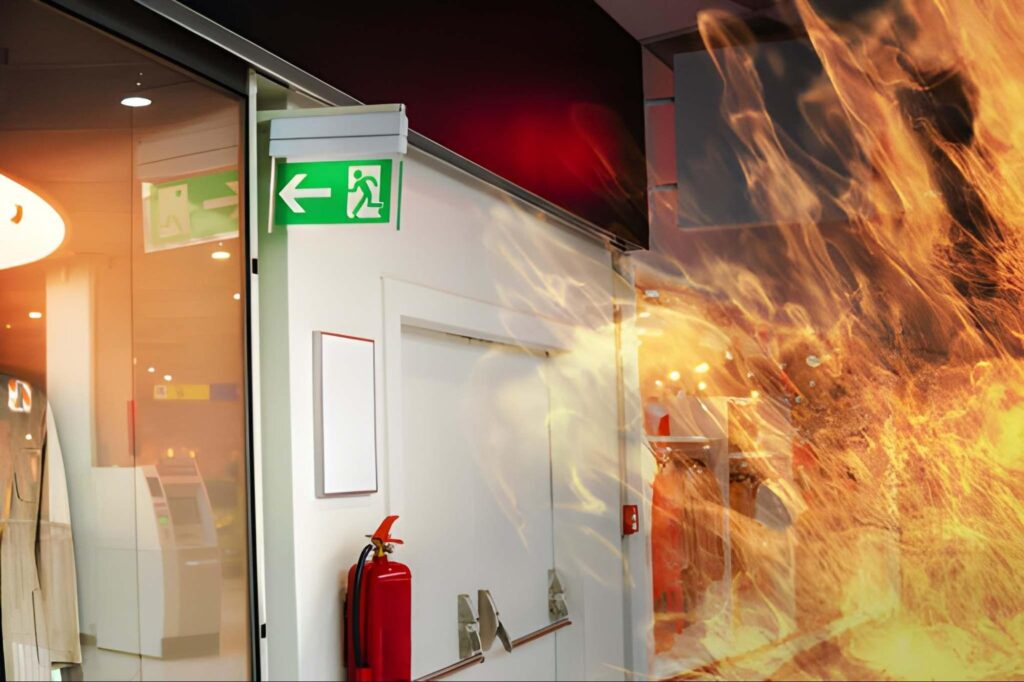
- Fire-rated doors and partitions that maintain protected escape paths.
- Use of non-combustible materials and restricted use of plastics unless they meet flame-spread standards.
Active Fire Protection
These mechanical and electrical systems detect, suppress, and control fire to support timely evacuation and firefighting.
- Automatic sprinkler systems are installed in high-risk, high-rise, and large-area buildings.
- Fire alarm systems that provide early warning and integrate with other building services.
- Smoke control, ventilation systems, and emergency lighting to maintain safe evacuation conditions.
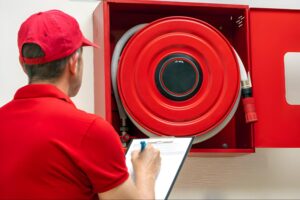
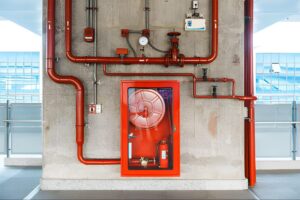
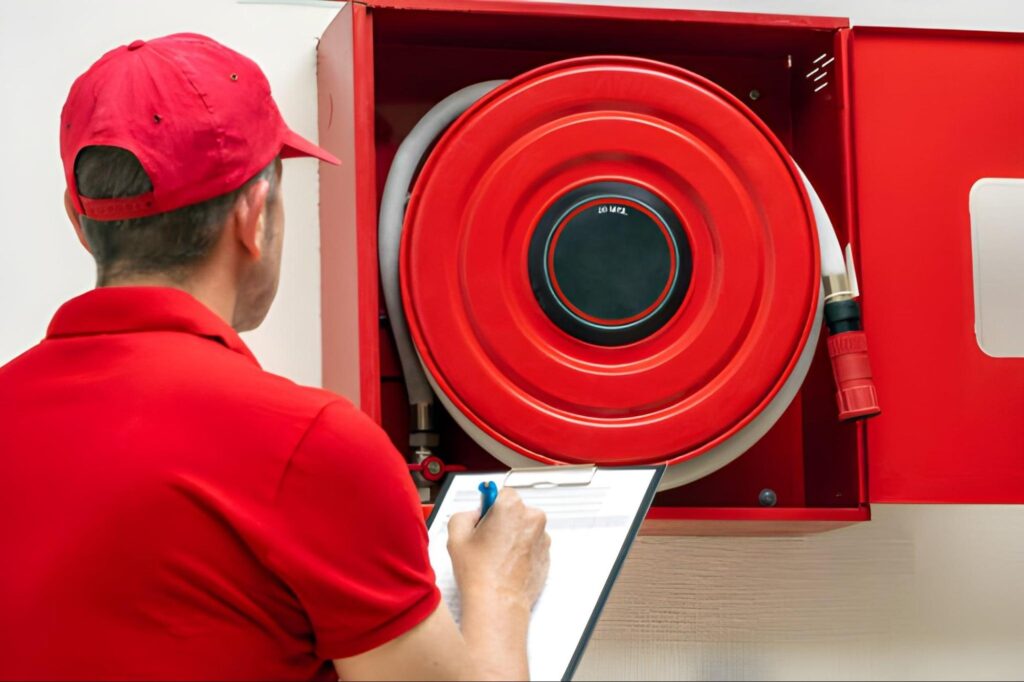
- Wet and dry risers, hose reels, and voice communication systems that support both occupants and SCDF firefighters during emergencies.
Fire Safety Compliance Checks
Ensuring fire safety compliance goes beyond design. It involves a process of submissions, inspections, and certifications overseen by the SCDF.
- Plan Submission & Approval: Qualified Persons (QPs) submit detailed building, fire protection, and mechanical ventilation plans via the CORENET e-submission system. SCDF reviews these plans and issues a Notice of Approval (NOA) if compliant.
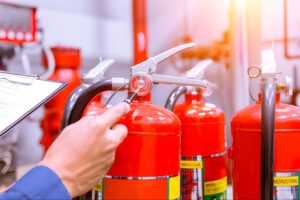
- Inspections & Audits: Registered Inspectors (RIs) conduct multi-stage inspections, test system operation under normal and emergency conditions, and verify that all installations match approved plans.
- Certification: Upon successful inspection, QPs apply for the FSC.
Ensure SCDF Compliance with Soteria’s Expert Fire Safety Solutions

Failure to comply with SCDF fire safety requirements can lead to project delays, fines, or FSC refusal. This is where we can assist with our comprehensive fire and life safety audits, helping you identify and address gaps before official inspections. By addressing these issues early, we can help you get the FSC, ensuring a smooth path to legal occupancy.
Consult Soteria today to secure a safe, compliant, and fully approved fire safety design for your building.